Horus 73 Takes Amateur Radio into the StratosphereThe Amateur Radio Experimenters Group (AREG) in Adelaide is preparing for another ambitious Project Horus high-altitude balloon launch on Sunday 30 August, with Horus 73 scheduled to lift off from Mt Barker at around 10:00 am ACST. The balloon is expected to climb beyond 30 kilometres, potentially providing radio coverage across hundreds of kilometres of South Australia and western Victoria. The headline payload is an experimental 2 metre to 70 centimetre cross-band FM repeater, operating on 145.075 MHz uplink with 91.5 Hz CTCSS and 438.975 MHz downlink. Want to know more ? |
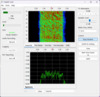
Two VK0 Stations on Air from Australian AntarcticaHere’s a reminder for DXers to keep an ear, and perhaps more importantly these days an eye on the waterfall, pointed south. Two Australian radio amateurs are currently based at two different Australian Antarctic research stations and operating as time, work and Antarctic conditions permit. Want to know more ? |
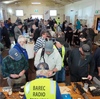
RadComms 2026: Convergence, Satellites, 6G and Why It Matters to Amateur RadioWIA representatives Peter Young VK3MV and Justin Giles-Clark VK7TW attended ACMA RadComms 2026 in Melbourne on 25–26 August, gaining a valuable view of where Australian and international radiocommunications are heading. Want to know more ? |
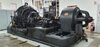
ARISS Contact with Rockingham Scout GroupOn Saturday, the 29th of August, Rockingham Scout Group, Rockingham, Western Australia, will have an arranged contact with and astronaut on board the International Space Station. Want to know more ? |
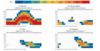
Radio Telescopes Turn Radar Receivers to Track Satellites and Space DebrisRadio telescopes normally spend their time listening for incredibly faint signals from stars, galaxies and other objects across the universe. Now researchers have demonstrated that the same highly sensitive receiving systems can be put to another use: detecting and tracking satellites and space debris in real time. Want to know more ? |