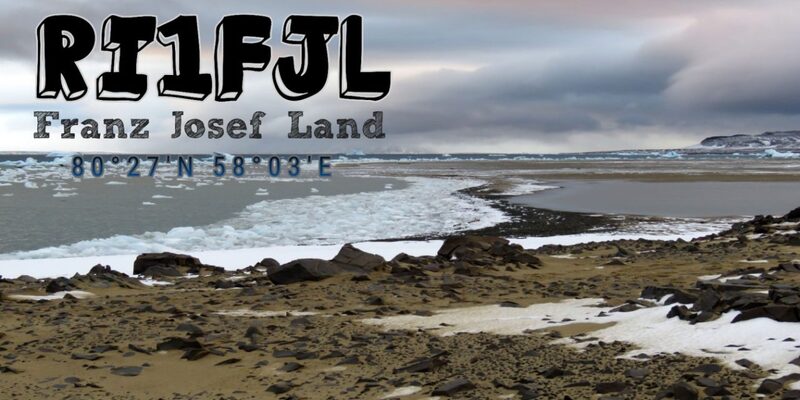
RI1FJL Makes Landfall on Franz Josef Land: First Signals Expected Soon
Date :
23 /
08 /
2026
Author :
DX World & RI1FJL Team
After a challenging Arctic voyage, the RI1FJL DXpedition has made landfall on Franz Josef Land and the team is now unpacking and preparing to get on the air. The latest update from DX-World, posted at 0600 UTC on 22 August, confirms the team has landed after reaching the shores of the archipelago and making its way to Heiss Island, home of the E.T. Krenkel Geophysical Polar Observatory. The message from the team was brief but rather welcome to DXers around the world: they have landed, they are unpacking, and everyone has their fingers crossed for the first signals soon.
Getting there has been an expedition in itself. The six-operator team departed aboard the yacht Mariya on 12 August, initially operating RI1FJL/MM on 30 metres FT8 while underway. Their voyage subsequently encountered heavy fog, strong winds and seas reaching around five to six metres. At one stage the yacht was forced to drift under staysail, while the team's FT-891 used for maritime-mobile operation also failed. On 21 August they finally reached Franz Josef Land and headed for Heiss Island, although the landing itself remained dependent on local ice conditions.
The activation is significant because Franz Josef Land is the northernmost DXCC entity in the world and particularly difficult and expensive to activate. The expedition follows around two years of planning, with approximately 800 kg of expedition equipment and supplies transported north. The team plans to operate from Heiss Island for approximately 15 days, making this a potentially valuable opportunity for VK operators needing Franz Josef Land for DXCC or simply wanting the considerable satisfaction of putting RI1FJL into the log from Australia. The project has an overall budget approaching US$80,000, illustrating the formidable logistics involved in putting a rare Arctic entity on the air.
So now comes the part DXers have been waiting for. The team needs to unpack, establish the station and antennas and turn a pile of expedition equipment into RF. Australian operators should keep an eye on the clusters and propagation, particularly for openings over the polar and long-path routes. After battling bureaucracy, Arctic seas, fog, ice and equipment failure simply to reach the operating site, complaining that they're only S3 at your QTH would probably be considered poor form.
Full credit to DX-World for its continuing updates, photographs, video and reports from the RI1FJL team.
Follow the latest RI1FJL Franz Josef Land updates on DX-World - Link
Page Last Updated: Saturday, 22 Aug 2026 at 21:45 hours by Justin Giles-clark
Click Here To Return To Previous Page
|