The Satellite That Refused to Die: AMSAT-OSCAR 7 Is Still Talking
Date :
03 /
10 /
2026
Author :
AMSAT & WIA
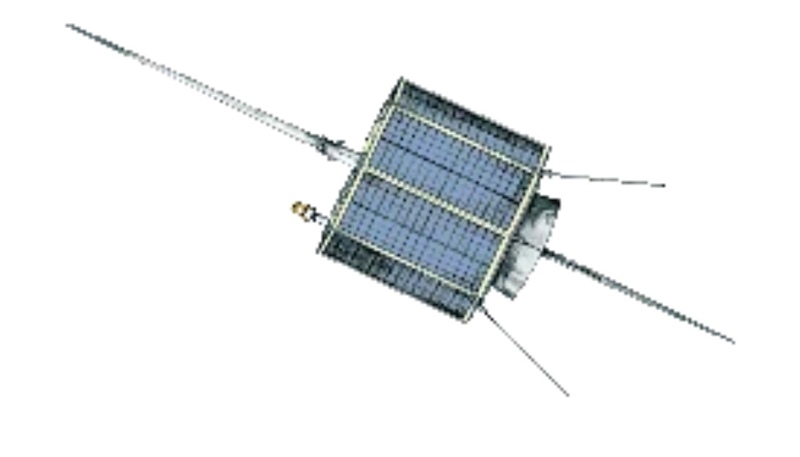
There are amateur radio projects that last a weekend, others that survive for years, and then there is AMSAT-OSCAR 7. Launched on 15 November 1974, AO-7 was built by an international team of radio amateurs and weighs just 28.6 kg. More than half a century later, AMSAT still lists it as active.
AO-7 was the second of AMSAT's Phase 2 amateur satellites and carried two linear transponders. Its Mode A transponder receives amateur signals on 145.850–145.950 MHz and retransmits them on 29.400–29.500 MHz, while Mode B provides a 432 MHz uplink and 145 MHz downlink.
For nearly seven years everything worked remarkably well. Then in 1981 its NiCad battery failed and AO-7 fell silent. The amateur satellite community eventually said goodbye and moved on, which was a perfectly reasonable response to a dead spacecraft. AO-7 apparently disagreed.
Twenty-one years later...
On 21 June 2002, British radio amateur Pat Gowen G3IOR was listening around the amateur satellite frequencies when he heard slow Morse telemetry near 145.97 MHz. The changing frequency showed the characteristic Doppler shift of an orbiting transmitter. The mysterious signal was eventually confirmed as AO-7, transmitting again after approximately 21 years of silence.
The explanation was almost as extraordinary as the discovery. The failed battery had apparently changed from a short circuit to an open circuit, allowing AO-7's solar panels to power the spacecraft directly. The consequence is wonderfully simple: AO-7 works when sunlight powers it and shuts down when it enters eclipse.
And it isn't merely producing an occasional carrier. Radio amateurs are still making two-way contacts through its linear transponders. In July 2026, AMSAT reported a new claimed Mode A distance record of 7,495 km, using AO-7's 2-metre uplink and 10-metre downlink. Not bad for hardware designed when the pocket calculator was still impressive technology.
Hear a Spacecraft Built in 1974
You don't need to transmit through AO-7 to enjoy it. When operating in Mode A, its downlink extends from 29.400 to 29.500 MHz, with the CW telemetry beacon around 29.502 MHz. AMSAT's current satellite information continues to list Mode A as active when the spacecraft is illuminated by sunlight.
That makes AO-7 particularly interesting for Australian amateurs with an HF receiver covering 10 metres. With a suitable pass and the satellite operating in Mode A, you can potentially hear signals from a spacecraft built by radio amateurs more than 50 years ago.
AMSAT currently reports AO-7 in a period of continuous sunlight, allowing its onboard 24-hour timer to alternate between Modes A and B. Operators should check the current AMSAT satellite status before attempting a pass.
AO-7 is an extraordinary piece of amateur radio history that is still happening above our heads. No functioning battery. No active ground commanding required for ordinary operation. Just solar panels, 1970s electronics and an amateur-built spacecraft that apparently never received the memo about retirement.
AMSAT: AO-7 satellite information and frequencies - Link
AMSAT: AO-7 50th Anniversary history - Link
AMSAT: Current satellite status reports - Link
AMSAT: Satellite operating schedules - Link
Page Last Updated: Friday, 02 Oct 2026 at 22:22 hours by Justin Giles-clark
Click Here To Return To Previous Page
|