When Rain Radar Detects Moths: The Great Bogong Migration and the Mystery of Radar Echoes
Date :
17 /
10 /
2026
Author :
ABC, BOM, WIA
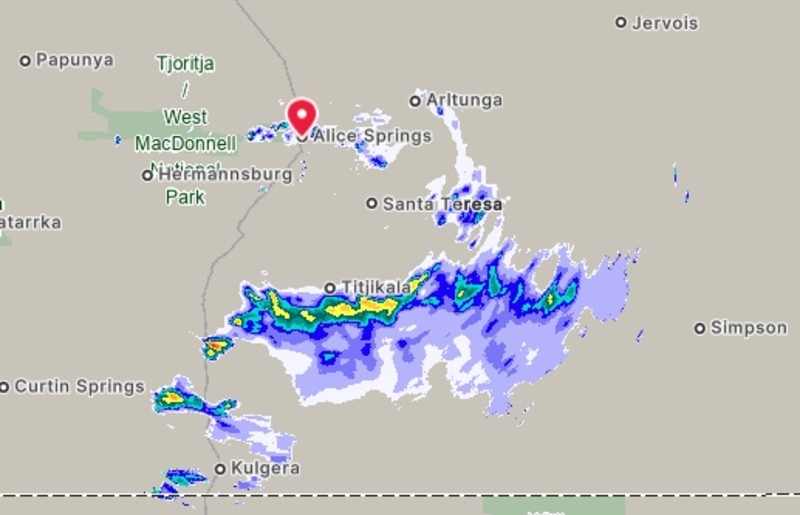
Sometimes what appears to be rain on a weather radar isn't rain at all. It might be millions of migrating moths!
Residents around Sydney, Canberra and parts of New South Wales have been witnessing an extraordinary natural event in recent weeks, with huge numbers of Bogong moths making their annual migration towards the Australian Alps.
But there's an intriguing radio science connection to this migration. Large swarms of insects can produce detectable echoes on weather radar, sometimes appearing remarkably similar to rainfall.
The Bureau of Meteorology (BOM) has previously explained that weather radar can detect far more than rain, including insects, birds, aircraft, smoke, ash and reflections from the ground or sea.
For radio amateurs familiar with radar, propagation and signal processing, it is a fascinating reminder that a radar signature may not always be what it first appears!
Millions of Moths on the Move
The Bogong moth (Agrotis infusa) is one of Australia's most remarkable migratory insects.
Every spring, enormous numbers travel hundreds of kilometres, sometimes more than 1,000 kilometres, from breeding grounds across eastern Australia to cool caves and rocky crevices in the Australian Alps.
There they spend the warmer months sheltered from the heat before undertaking the return journey.
This year's migration has attracted considerable attention, with large swarms reported around Sydney, Canberra, the NSW South Coast and surrounding districts.
Scientists are encouraged by the sightings, particularly after Bogong moth populations suffered a catastrophic decline of up to 99.5 per cent between 2017 and 2019.
The moths are also ecologically important, providing a vital food source for the critically endangered mountain pygmy possum.
When Moths Look Like Rain
Weather radar works by transmitting pulses of radio energy and measuring the signals reflected back from objects in the atmosphere.
Normally, these echoes come from raindrops, hailstones or other precipitation.
However, sufficiently large concentrations of insects can also reflect radar signals.
When millions of moths are flying through the atmosphere, their combined radar returns can resemble areas of light rainfall.
In fact, this is not the first time Bogong moths have caused confusion for weather observers.
During the Sydney Olympic Games in 2000, enormous swarms attracted by the stadium lights reportedly produced radar returns that were initially interpreted as approaching rain.
The phenomenon illustrates an important principle of radar technology: the receiver detects reflected radio energy, but determining exactly what produced that reflection requires additional information and careful interpretation.
The Science Behind the Radar Echo
Modern weather radars use a combination of techniques to help distinguish rain from other targets.
These include analysing the strength of the reflected signal, the movement of the target through Doppler measurements, and the characteristics of signals returned with different polarisations.
Dual-polarisation radar, for example, can provide additional information about the shape and orientation of reflecting objects, helping meteorologists distinguish precipitation from insects and other sources of radar clutter.
But even sophisticated radar systems can encounter ambiguous returns.
Bird migrations, insect swarms, smoke, sea clutter and unusual atmospheric conditions can all create signatures that require further interpretation.
For amateur radio operators, this is a useful reminder that radio signals are influenced by far more than just the equipment transmitting and receiving them.
Propagation conditions, reflections, scattering, interference and the characteristics of the reflecting target can all affect what appears on a receiver or display.
A Fascinating Opportunity for Amateur Radio Experimenters
The Bogong moth migration provides an interesting example of the intersection between radio technology, meteorology, biology and environmental science.
It also demonstrates why understanding signal characteristics is so important when interpreting radar and other radio-frequency measurements.
For amateur radio clubs, the story offers a terrific starting point for discussions about radar principles, Doppler shift, scattering, signal processing and the interpretation of RF data.
There are also opportunities to explore citizen science, with researchers encouraging members of the public to report Bogong moth sightings to help better understand migration patterns and population recovery.
Why not try Bogong Moth scatter experiments much like scattering a signal off a rain front or Auroral curtain.
Radar Signatures May Not Be What They Seem!
The next time you look at a weather radar image showing an area of apparent rainfall, remember that the radar is actually displaying interpreted radio reflections.
Sometimes those reflections really are rain.
Sometimes they are caused by birds, insects or unusual atmospheric conditions.
And occasionally, they might be millions of Bogong moths on their way to the mountains.
It's a wonderful example of how radio science can reveal an extraordinary natural event, and why understanding what a signal represents is just as important as detecting it in the first place.
Further Information
Original Instagram Reel:
Link
Bureau of Meteorology: How Does Weather Radar Work?
Link
BOM: Understanding Rain Radar and Weather Maps
Link
BOM: Live Rain Radar
Link
ABC News: Bogong Moths Arrive in Sydney and Canberra
Link
Bogong Watch Citizen Science Project
Link
Zoos Victoria: Moth Tracker
Link
Page Last Updated: Friday, 16 Oct 2026 at 19:35 hours by Justin Giles-clark
Click Here To Return To Previous Page
|