Nearly 17,000 Satellites in Orbit: A Growing Challenge for Amateur Radio Spectrum
Date :
18 /
10 /
2026
Author :
Critical Comms & WIA
The extraordinary growth in satellite constellations is transforming global communications, but it is also raising increasingly serious questions about orbital congestion, radio-frequency interference and the future protection of amateur radio spectrum.
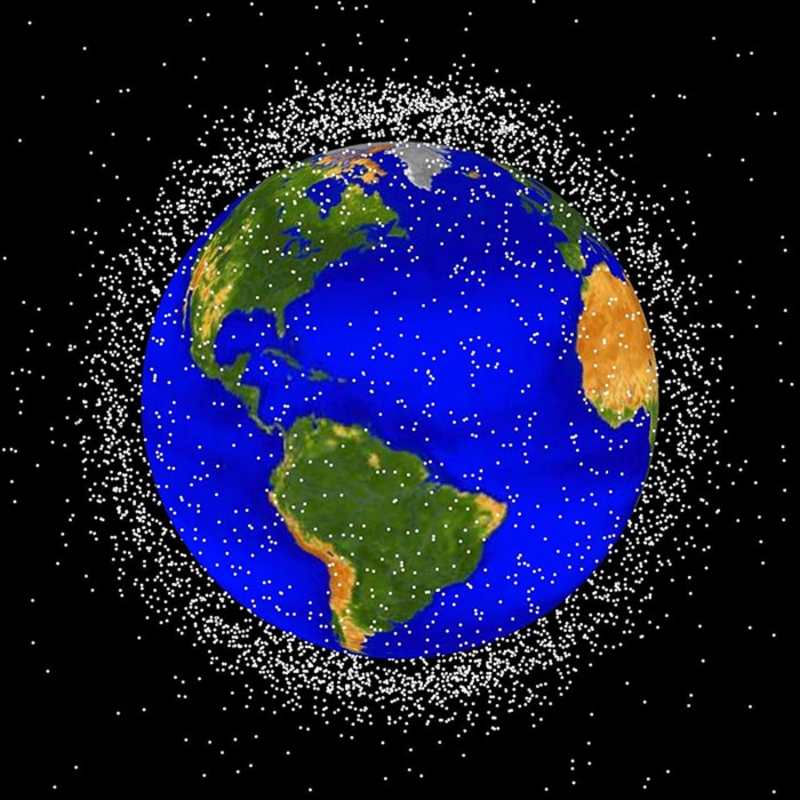
A recent report published by Critical Comms, drawing on the fourth edition of the Look Up x Le Point Space Barometer, reveals that the number of active satellites orbiting Earth has reached 16,819, an increase of 29 per cent over the previous twelve months.
The report highlights the remarkable pace of development in space-based communications, with 4,737 satellites launched over the reporting period and more than 34,000 objects now being tracked in Earth orbit, including satellites, rocket stages and space debris.
SpaceX's Starlink constellation dominates the figures, with 11,041 active satellites, including approximately 640 dedicated to its Direct to Cell mobile communications service. China is also rapidly expanding its presence in orbit, with 1,434 active satellites.
These developments demonstrate the enormous investment being made in satellite communications, but they also highlight the growing complexity of managing both orbital space and the radio-frequency spectrum.
The Implications for Amateur Radio
For radio amateurs, the issue extends beyond the increasing number of satellites visible in the night sky.
Large satellite constellations create additional demands on spectrum management, international frequency coordination and interference protection.
Amateur radio has a long history of innovation in satellite communications, weak-signal experimentation, Earth-Moon-Earth communications and microwave technologies. Many of these activities depend on access to relatively quiet and predictable radio-frequency environments.
As commercial satellite systems expand, the challenge is ensuring that amateur radio allocations remain both legally available and practically usable.
The AST SpaceMobile Ruling: A Warning Sign
A recent decision by the United States Federal Communications Commission (FCC) illustrates why amateur radio organisations are increasingly concerned.
In April 2026, the FCC authorised AST SpaceMobile to conduct emergency telemetry, tracking and command operations using frequencies within the 430–440 MHz amateur radio band outside the United States.
The decision followed a regulatory process that attracted more than 2,500 public comments, including concerns raised by amateur radio organisations.
The International Amateur Radio Union (IARU) expressed concern about the precedent established by the decision and its potential implications for amateur radio spectrum protection.
Although the authorisation concerns specific satellite operations and does not represent a general removal of the amateur allocation, it demonstrates the increasing pressure to accommodate commercial satellite requirements in frequencies already used by other services.
For Australian amateurs, the issue is particularly relevant to the 70-centimetre band, which supports repeaters, satellites, digital communications, weak-signal experimentation and other activities.
When Spectrum Allocations Are No Longer Enough
Historically, amateur radio spectrum protection has focused heavily on maintaining allocations within national and international frequency tables.
However, the rapid expansion of satellite networks raises a more complicated question.
What happens when amateur radio retains its frequency allocations, but increasing interference or competing uses make those frequencies progressively less usable?
Large constellations can introduce challenges involving unwanted emissions, aggregate interference, receiver overload and the coordination of space-based transmissions.
Not every satellite system creates interference to amateur radio, and technical standards and coordination arrangements remain important safeguards. Nevertheless, the scale and speed of satellite deployment are placing increasing demands on existing regulatory frameworks.
Why WIA and IARU Representation Matters
The AST SpaceMobile decision highlights the importance of maintaining effective national and international representation for amateur radio.
Commercial satellite and telecommunications companies have substantial financial resources, regulatory expertise and technical teams supporting their spectrum requirements.
By comparison, amateur radio depends heavily on volunteers, national societies and the International Amateur Radio Union to represent its interests.
In Australia, the Wireless Institute of Australia (WIA) works with the Australian Communications and Media Authority (ACMA) on spectrum management, interference concerns and regulatory matters.
Internationally, the IARU represents amateur radio interests through the ITU regulatory processes and preparations for World Radiocommunication Conferences.
With WRC-27 scheduled for October and November 2027, the importance of informed technical contributions, effective representation and coordinated advocacy will only increase.
Protecting the Future of Amateur Radio
The growth of satellite communications offers exciting opportunities, including improved connectivity for remote communities, new technologies and greater access to space-based services.
However, these benefits must be balanced against the need to protect existing spectrum users.
For amateur radio, the challenge is not simply opposing new technology. It is ensuring that new systems are developed and regulated in ways that recognise the legitimate requirements of other services.
The Look Up Space Barometer provides a striking illustration of how rapidly the orbital environment is changing.
The AST SpaceMobile ruling demonstrates that the regulatory consequences are already being felt.
The message for amateur radio is clear: retaining our frequency allocations is important, but ensuring those frequencies remain usable is just as critical.
The WIA encourages Australian radio amateurs and affiliated clubs to recognise the importance of spectrum advocacy, contribute technical expertise and interference evidence where appropriate, and support the national and international organisations working to protect amateur radio's future.
Sources and Further Reading
Critical Comms: Nearly 17,000 Active Satellites Are Now in Orbit
Link
Look Up: Space Situational Awareness and Space Barometer
Link
IARU: FCC Approves AST SpaceMobile Emergency TT&C Operations in the 430–440 MHz Amateur Band
Link
IARU: Spectrum Protection
Link
International Telecommunication Union: WRC-27
Link
Wireless Institute of Australia
Link
Source acknowledgement: Satellite statistics and orbital activity figures are credited to Critical Comms, reporting on the fourth edition of the Look Up x Le Point Space Barometer. The AST SpaceMobile regulatory example is separately attributed to the IARU. Commentary on Australian amateur radio and spectrum advocacy reflects the broader implications of these developments.
Page Last Updated: Monday, 19 Oct 2026 at 17:01 hours by Justin Giles-clark
Click Here To Return To Previous Page
|