When the Internet Goes Down: Satellites to Provide Automatic Backup for Submarine Cables
Date :
07 /
11 /
2026
Author :
Type your name here
What happens when an undersea communications cable fails? A European Space Agency project is developing technology that could automatically switch essential internet traffic to satellite networks, helping maintain communications during major infrastructure disruptions.
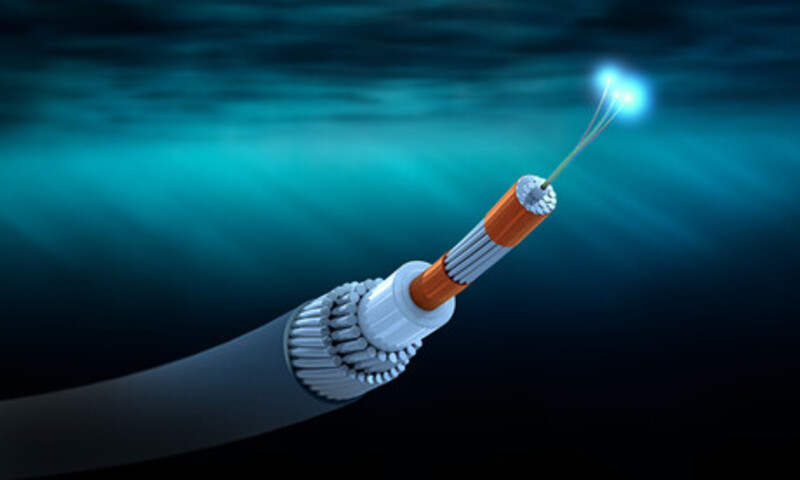
Submarine fibre-optic cables form the backbone of international communications, carrying approximately 99 per cent of intercontinental data traffic. Despite their importance, these cables remain vulnerable to damage from shipping, fishing activities, natural disasters and other incidents.
According to an article published by Critical Comms on 23 September 2026, around 30 per cent of tracked submarine cables experience at least one fault annually, with repairs typically taking between 10 and 20 days.
Introducing CableShield
The European Space Agency (ESA) has selected Belgian satellite communications specialist neXat to lead a €1.5 million project called CableShield.
Working with satellite operator Telesat and telecommunications infrastructure provider Colt Technology Services, the project aims to develop an automated backup system that can detect submarine cable failures and redirect essential communications traffic through satellite networks.
Rather than waiting for engineers to manually reconfigure communications routes, CableShield is being designed to identify an interruption, determine what satellite capacity is available and automatically establish alternative connections.
How Will It Work?
CableShield brings together three key capabilities:
Automatic fault detection: Monitoring submarine cable connectivity and identifying interruptions.
Intelligent satellite selection: Identifying and allocating capacity from multiple satellite providers and orbital networks.
Automatic traffic rerouting: Prioritising essential communications and transferring selected traffic to satellite links.
The project uses standardised interfaces to allow satellite and terrestrial networks to work together.
Telesat's planned Lightspeed Low Earth Orbit (LEO) satellite constellation will form an important part of the proposed solution.
The project includes an 18-month development and validation program, with a targeted commercial launch in 2028.
Importantly, satellites will not replace the enormous data-carrying capacity of submarine fibre cables. The objective is to maintain priority communications and critical services while damaged infrastructure is repaired.
Why Is This Important for Australia?
Australia's international communications depend heavily on submarine cables connecting us to Asia, the Pacific and the rest of the world.
A 2026 Australian National University report identified approximately 16 privately operated submarine cables supporting around 99 per cent of Australia's international communications and data requirements.
For an island state such as Tasmania, the broader principle of maintaining multiple communications paths is particularly relevant.
When communications infrastructure fails, the consequences can extend beyond internet access to banking, business operations, government services and emergency management.
CableShield represents an important development in building resilience into these increasingly interconnected systems.
What Can Amateur Radio Learn?
For radio amateurs, particularly those involved in WICEN, emergency communications and portable operations, the project highlights several familiar principles:
Redundancy: Avoid relying on a single communications system or infrastructure provider.
Automatic failover: Design systems that can recover quickly when a primary communications path fails.
Independent communications: Maintain capabilities that do not depend entirely on the public internet or mobile networks.
Traffic prioritisation: Ensure essential messages can still get through when bandwidth or communications resources are limited.
Regular testing: Backup systems are only useful when they have been tested under realistic conditions.
Amateur radio cannot replace international fibre-optic networks, but independently powered HF, VHF and UHF stations, portable repeaters and other radio systems can provide valuable supplementary communications during emergencies.
The CableShield project is another reminder that communications resilience is not simply about having more technology. It's about having alternative ways to communicate when something fails.
Further Information
Original Critical Comms Article, 23 September 2026:
Link
European Space Agency:
Link
neXat:
Link
Telesat Lightspeed:
Link
International Telecommunication Union: Submarine Cable Resilience:
Link
Wireless Institute of Australia:
Link
Source acknowledgement: Critical Comms, “Automating satellite back-up for submarine cable networks”, 23 September 2026. Additional Australian context from the Australian National University National Security College, August 2026. Amateur radio and emergency communications commentary is provided for WIA readers.
Page Last Updated: Friday, 06 Nov 2026 at 22:11 hours by Justin Giles-clark
Click Here To Return To Previous Page
|